
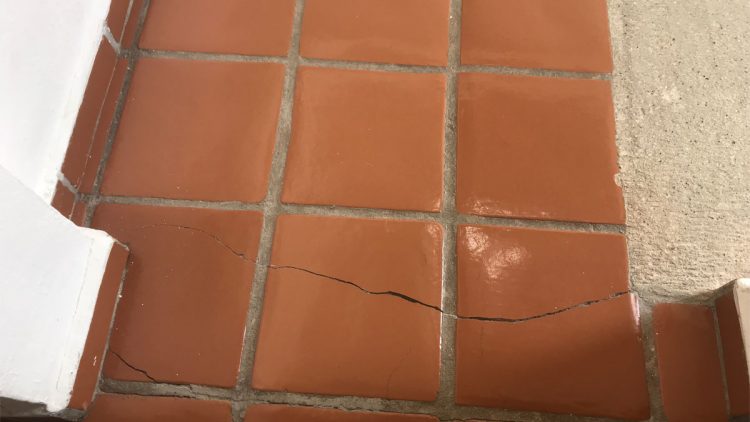
Why Do Tiles Crack?
Regarding flooring options, tile floors are popular for their sustainability, aesthetic appeal, and ease of maintenance. Nevertheless, when tile floors are not correctly installed, they can develop cracks after a while.
Understanding the possible causes of these cracks is vital for homeowners and contractors respectively. The following is going to explore the three main causes why tile floors crack and go over preventive measures to guarantee the lifetime of your tile flooring investment.
Inadequate Mortar Coverage
When there is insufficient thin-set mortar under tiles, a lot of issues can happen, including inadequate bonding. Thin-set mortar is vital for creating a powerful bond between the tile and the subflooring. If there isn’t sufficient mortar, the tile might not adhere correctly, which could cause the tile to get loose, crack, or even unfasten from the surface after a while.
There are lines of thin-set mortars that are specially intended to work with flooring membranes and boards. Adaptable thin-set mortar is manufactured for use both under and over uncoupling membranes and waterproofing membranes.
Absence of an Uncoupling Membrane
The considerable causes of impairment on tiled floors are motion stress and water permeation. Tile underlayment serves as a preventive layer between the tile and the subfloor by taking in stress and stopping that stress from passing to the tiles. If a tile underlayment is left out from the installation process, the immediate transfer of stress from the substrate to the tile can be the cause cracks of the tile and/ or grout, and detachment of the tiled surface.
To improve the longevity of your tile floor, think about using a tile underlayment during installation. The underlayment features an open-rib structure which enables the subfloor and the tile to move separately, therefore eliminating movement stresses and preventing cracking and delaminating of the tiled surface. The underlayment is additionally waterproof to prevent subfloor damage in the occurrence of a water leak. This is a vital component in hindering mold and mildew, specifically in wet areas.
Lack of Movement Joints
Tiles, as with other construction materials, grow and shrink with changes in humidity and temperature. Devoid of the presence of movement joints, these motions can place stress on the tiles, resulting in cracks. Movement joints allow for managed expansion and alleviate the strain that can collect when tiles are limited.
Movement joint profiles are suggested to be installed at particular intervals, like entryways, transitions, and large open spaces—a minimum of twelve feet and a maximum of twenty feet in any direction based on the size of the tiled area. Some systems offer a variety of different movement joint profiles to fit the requirements of any installation.
Movement joints are transition profiles which comprise of flexible chlorinated polyethylene areas through the middle that adapt for movement within a tile or natural stone installations. Movement adaptation is required in all floor tiles or natural stone implementations as it stops tile from cracking because of movement. Even though these profiles are required in tile or natural stone installation, many tile installers neglect to integrate them into such implementations because of lack of knowledge and/or misconception. In areas with strong climate changes, structures are more inclined to movement due to the extreme changes in temperature, and movement joints are going to accommodate this movement to safeguard the tile or natural stone area. Neglecting to integrate the necessary movement joints are going to eventually result in damage to the surface covering.
For the last 27 years, Mexican Tile Restoration has provided tile refinishing, tile restoration, grout cleaning, among other services for Saltillo tile, marble tile, travertine tile, granite tile, terrazzo tile, limestone tile, porcelain tile, and ceramic tile floors. We also offer grout cleaning/sealing. Get a free tile restoration quote anywhere in Phoenix including Scottsdale, Mesa, Tempe, Chandler or anywhere else by giving us a call today. We are proud to be the #1 Mexican tile cleaning, grout cleaning, tile repair, tile tear out, and tile replacement provider in the Phoenix Valley since 1990. Mexican Tile Restoration cleans and removes scratches from old saltillo tile and grout, reverses fading damage from excessive sunlight, replaces broken tiles, matches colors for replacement tiles, mends chipped grout lines, and polishes and seals your entire floor to make it look brilliantly new again!
We invite you to call us today at 602-370-6082 to discuss your tile & grout restoration and service needs in Phoenix, Arizona!